
More
    HomeWorldRTAF says it struck a Cambodian weapons depot in Battambang on December...

    RTAF says it struck a Cambodian weapons depot in Battambang on December 24, after continued attacks on Thai military and civilian targets, stressing self-defence and minimal civilian impact. Air Marshal Jackkrit Thammavichai, spokesman for the Royal Thai Air Force (RTAF), said on Wednesday that the air force continues to support requests from the Royal Thai Army, particularly in areas of active fighting, as Cambodia continues to attack Thailand, including both military and civilian targets, threatening the lives and property of the public. “Peace requires sincerity. At this stage, Cambodia has shown no sincerity at all when it comes to a ceasefire, so it is the duty of the military to protect the lives and property of the people,” Jackkrit said. He said the RTAF carried out an air operation on the morning of December 24, 2025, striking a Cambodian weapons depot in Phnom Sampov subdistrict, Banan district, Battambang province, in order to degrade Cambodia’s capabilities and ensure the safety of Thai forces. Asked whether this marked an escalation and the first deep strike into Cambodian territory, Jackkrit said the RTAF remains focused on military targets under Thailand’s right of self-defence. He added that armed strikes are a lawful right and, in this context, also a humanitarian action, stressing that the operation did not target people or Cambodian troops but weapons and other threats. Jakkrit said all targets struck from the first day to the present have been strictly military objectives, and that operations have been conducted to minimise impacts on civilians.

    Published on

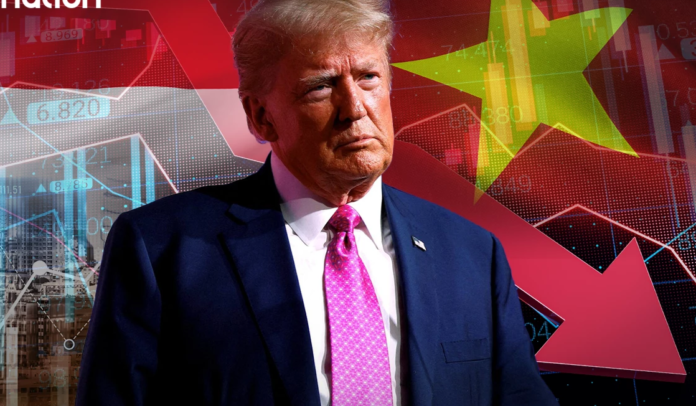
    Trump’s US tariffs are forcing ASEAN footwear makers to rethink investment, with projects scrapped in Indonesia and factories in Vietnam accelerating automation.

    Foreign footwear manufacturers are scrapping investment plans in Indonesia, while factories in Vietnam are rushing to adopt automation and slowing new hiring as US tariff measures begin to bite, according to a Nikkei Asia report.

    The slowdown in US demand is also pushing Asian producers to look for new markets. However, some American buyers have signalled they do not intend to abandon long-standing suppliers in the region, raising questions over whether the tariffs will achieve Washington’s stated aim of driving manufacturing back to the United States.

    Vietnam and Indonesia are the world’s second- and third-largest footwear exporters by volume after China. In 2024, Vietnam exported about 1.58 billion pairs, while Indonesia shipped roughly 601 million pairs; Cambodia also ranked among the top 10 exporters.

    Following protracted negotiations, the United States set “reciprocal” tariff rates at 19% for goods from Indonesia and Cambodia, and 20% for goods from Vietnam.

    Yoseph Billie Dosiwoda, executive director of the Indonesian Footwear Association, said the uncertainty created by the tariffs had led some investors to cancel plans to build factories in the country. He said investment sentiment was weakening and expressed hope the US rate could be lowered to 15% or 10%.

    Dosiwoda said demand for Indonesian footwear in the US fell by around 23% in the first nine months of 2025, which he linked to weaker American purchasing power. He warned that if tariffs remained “above 15%”, Indonesian-made products would become uncompetitive due to higher production costs and relatively low labour productivity.

    He also called for domestic deregulation to lift productivity, improve the investment climate and adjust wage structures, as labour groups push for higher pay. Vietnam, meanwhile, is preparing a nationwide minimum-wage increase.

    Vietnam’s national statistics data showed footwear exports to the United States fell 4% year on year in November, after a 13% decline across the previous three months. Companies have responded by seeking new customers, cutting costs and shifting towards higher-priced products.

    One factory executive overseeing tens of thousands of workers said rising costs were being shared between buyers and producers, adding that many plants were stepping up automation.

    Maybank economist Brian Lee told Nikkei Asia that weaker external demand could weigh on employment trends, with companies becoming more cautious about hiring.

    Latest articles

    Policy Dialogue on Nepal’s Pre-Election Politics and Geopolitics Held in Kathmandu

    A half-day in-person policy dialogue titled “Nepal at a Crossroads: Pre-Election Politics, Geopolitics, and...

    Strengthening Ties: Bangladesh and Nepal Discuss Trade Growth in Kathmandu.

    Special Correspondent, Kathmandu: A significant and fruitful discussion meeting was held in the Nepalese capital,...

    Upper Thailand stays cold; Bangkok shrouded in morning fog with rain possible

    The Thai Meteorological Department (TMD) issued its weather forecast for Monday (January 19), saying upper Thailand...

    Bangkok PM2.5: Chatuchak highest as pollution levels raise health concerns

    Bangkok’s air quality centre reports PM2.5 readings on January 19, with Chatuchak recording the...

    More like this

    Policy Dialogue on Nepal’s Pre-Election Politics and Geopolitics Held in Kathmandu

    A half-day in-person policy dialogue titled “Nepal at a Crossroads: Pre-Election Politics, Geopolitics, and...

    Strengthening Ties: Bangladesh and Nepal Discuss Trade Growth in Kathmandu.

    Special Correspondent, Kathmandu: A significant and fruitful discussion meeting was held in the Nepalese capital,...

    Upper Thailand stays cold; Bangkok shrouded in morning fog with rain possible

    The Thai Meteorological Department (TMD) issued its weather forecast for Monday (January 19), saying upper Thailand...